Unified Legal Intelligence: An API-Led Connectivity Story
- Centralized tracking of thousands of legal proceedings worldwide.
- Instant data retrieval for legal teams and authorities.
- End-to-end encryption for sensitive case documentation.
- High reusability of data assets across regional jurisdictions.
Client Overview
The client is a global leader in legal advocacy for victims of trafficking and violent crime. They manage a vast repository of legal evidence and case tracking data that must be accessible to lawyers and law enforcement across multiple continents and legal systems.
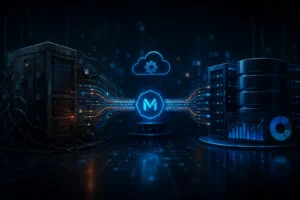
They struggled to maintain a consistent view of its legal case files across disparate jurisdictions. Previously, legal data was siloed within local servers, making it nearly impossible for global headquarters to track the progress of systemic injustice proceedings in real time. However, by launching a targeted Digital Transformation, the organization centralized its legal documentation using a modern integration platform. Consequently, this migration established a Scalable Architecture that connects local courtroom data to a global dashboard. As a result, the organization now possesses the agility to provide legal teams with the real-time insights required to secure convictions against traffickers.
Project Details
| Category | Details |
| Sector | Legal Services / Non-Profit |
| Tech Stack | MuleSoft CloudHub 2.0, Salesforce, Azure Key Vault, GitHub Actions |
| Approach | API-Led Connectivity & Data Centralization |
Technical Challenges in Legal Tracking
Data Fragmentation and Latency
Legal updates from different regions often took days to synchronize with the central database. This latency hindered the ability of global advisors to provide timely guidance on active cases, potentially jeopardizing legal outcomes.
Complex Regulatory Compliance
Managing legal data across thirty countries requires strict adherence to varying data residency and privacy laws. The legacy systems lacked a centralized governance framework, making it difficult to ensure consistent compliance across all regions.
Manual Documentation Processes
Legal teams were burdened by manual data entry and document uploads. Without Automated CI/CD for their internal tools, new features designed to simplify case tracking were slow to reach the staff who needed them most.
The Solution: Cloud Integration for Legal Teams
Domain-Driven API Design
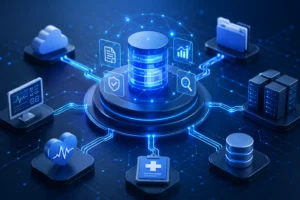
The architects implemented a domain-driven API-Led Connectivity strategy, creating specific APIs for “Cases,” “Evidence,” and “Court Proceedings.” This modularity allows the organization to build new legal tools by simply consuming existing data services.
Secure Asset Management
To protect the integrity of legal evidence, the solution leverages Azure Key Vault for the encryption of sensitive documents. This Cloud Integration ensures that all case files remain confidential and tamper-proof during transmission and storage.
Reliable Global Synchronization
The team utilized MuleSoft’s advanced orchestration capabilities to manage complex data flows between regional offices and the central Salesforce CRM. This ensures that legal teams always have access to the most current version of a case file, regardless of where it originated.
Business Results of Scalable Architecture
Improved Legal Outcomes
Real-time access to case data has empowered legal teams to react faster to courtroom developments. This improved visibility has contributed to a more efficient prosecution process and a higher rate of successful interventions.
Streamlined Regulatory Auditing
The centralized API catalog and logging framework provide a clear audit trail for all data access. This Digital Transformation has simplified the process of demonstrating compliance with international human rights and data protection standards.
Increased Technical Efficiency
By implementing Automated CI/CD pipelines, the organization has reduced the time required to deploy legal tool updates by 50%. This allows developers to focus on creating sophisticated features like automated case status alerts.
Looking Ahead with API-Led Connectivity
With a robust legal data foundation now in place, the organization is looking toward utilizing AI to identify patterns in trafficking cases across different regions. By leveraging the Scalable Architecture built today, they can easily feed cleaned, integrated legal data into advanced machine learning models to predict and prevent future crimes.