Legacy Data Migration & Centralization
Impact Summary
- Eliminated Legacy Dependency: Moved all customer data pull tasks away from the slow legacy FAST platform.
- Centralized Data Hub Access: Created a single integrated platform for contracts, new business forms, and transactions.
- Decreased System Latency: Replaced the slow performance of the older application with a fast, modern system.
- Optimized Architecture Scale: Built a scalable data network ready to handle larger enterprise workloads.
Customer Story & Client Overview
The institution operates as a prominent global force in the life, annuity, and reinsurance markets, specializing in turning permanent capital into secure retirement plans. To maximize returns for its policyholders, the business scales its reach through tactical market acquisitions and modern customer engagement frameworks.
In the past, the corporate back-office faced massive backlogs because service divisions relied completely on a slow, siloed transaction core to pull account files. This architecture created long, frustrating delay windows for policyholders during live calls. Seeking an immediate remedy, the business collaborated with external integration experts to overhaul its data structures. Developers systematically shifted all active backend lookups out of the fragile legacy system and into a high-capacity integrated platform. Today, desk associates navigate a single, lightning-fast platform screen to answer queries instantly. This modern environment keeps operations running smoothly, cuts down ongoing maintenance costs, and gives the enterprise the perfect footing to scale up smoothly.
Project Details Table
| Category | Details |
| Sector | Insurance & Financial Services |
| Tech Stack | Enterprise Data Hub (EDH), MuleSoft APIs |
| Approach | Legacy Migration Strategy & Data Hub Centralization |
Technical Challenges: Legacy Migration Strategy
- Core Application Latency: The aging FAST system suffered from extreme transaction processing delays, slowing down standard data extraction.
- Data Retrieval Roadblocks: Information remained locked within separate technical silos, requiring heavy processing efforts to query simple records.
- Fragmented Enterprise Footprint: Missing a unified platform forced duplicate maintenance tasks and created information inconsistencies across regions.
The Solution: Data Hub Centralization
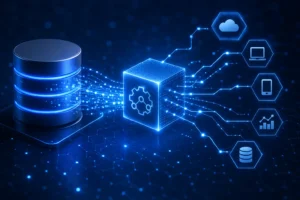
- Central Integrated Architecture: Deployed an Enterprise Data Hub (EDH) to pull data away from old legacy platforms into a reliable storage layer.
- System Migration Framework: Modeled targeted data pipelines to extract historical data contracts and clear transaction records cleanly.
- Centralized Information Access: Established an organized data hub directory layout to serve as the main source of truth for the organization.
Business Results: Insurance Digital Transformation Success
- Operational Velocity: Reduced processing friction by diverting heavy live call queries away from the slow core engine.
- Information Consistency: Enabled absolute accuracy across customer accounts by standardizing records in the central integrated platform.
- System Longevity: Decreased overhead costs by decreasing operational dependencies on expensive legacy licensing models.
Looking Ahead: Next Generation Insurance System Modernization
The newly established integration foundation provides an ideal springboard for upcoming digital initiatives and technological growth. The company is now fully equipped to easily incorporate advanced analytics, automated workflows, and artificial intelligence tools. Because the architecture remains highly scalable, it easily accommodates expanding transaction volumes and future business demands without performance degradation. This successful modernization firmly secures the provider’s position as an agile, customer-centric leader within the competitive insurance industry.