
Anypoint Connector for Salesforce Composite API enables teams to work with Salesforce Composite REST APIs. These lightweight services significantly improve integration performance across the Salesforce platform. When teams apply the right integration patterns, composite-based designs reduce API calls compared to traditional Salesforce connectors.
As integration volumes grow, API limits often become a hidden bottleneck. Therefore, organizations must rethink how they design Salesforce integrations. NJC Labs helps customers optimize API usage while still improving speed and reliability through MuleSoft-based integration strategies.
What is a Salesforce Composite Connector?
The composite integration approach in Salesforce allows multiple operations to run within a single REST API request. Instead of executing separate calls for each object, teams can bundle related requests together. As a result, integrations reduce network latency and system round-trips.
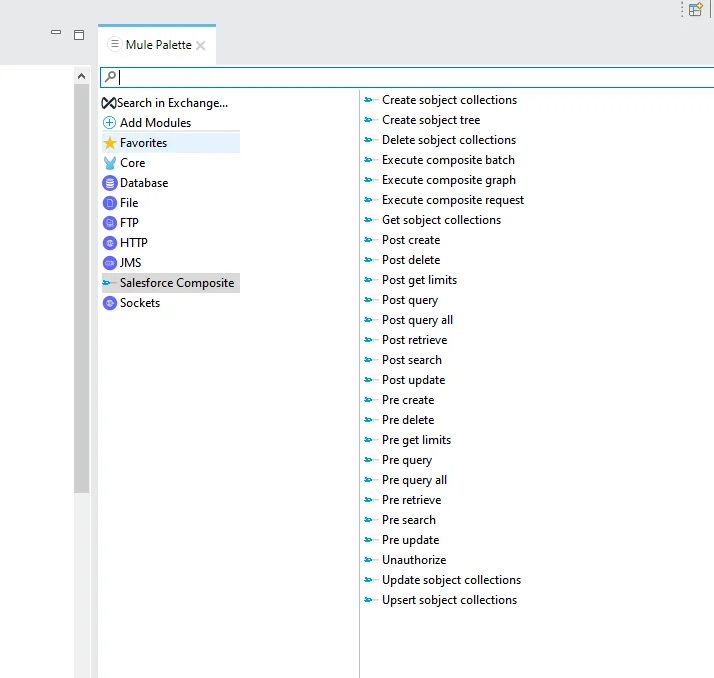
This approach works especially well in enterprise environments. In such cases, integrations must synchronize data across multiple Salesforce objects or enrich records with external system responses.
Why Standard Salesforce Integrations Struggle at Scale
A standard Salesforce connector usually handles one object per request. However, most business processes involve multiple objects with parent-child relationships. Consequently, the total number of API calls increases rapidly.
Over time, this model consumes Salesforce platform API limits. As a result, organizations often need to purchase higher API usage tiers. By contrast, MuleSoft composite APIs reduce API consumption while maintaining strong performance. Therefore, they support scalable and cost-efficient integration architectures.
Benefits of Using Composite APIs with MuleSoft and Salesforce
- First, teams can create nested parent-child records in a single request
- Additionally, fewer API calls reduce network overhead and processing time
- Moreover, integrations can execute dependent requests in one API call
- Finally, teams can create, update, or delete multiple records in a single operation
Operations Exposed by Composite Resources
- Composite operations: Execute dependent requests sequentially and reuse responses in subsequent calls
- Batch: Execute up to 25 independent sub-requests in one call
- SObject Tree: Create hierarchical parent-child records in a single operation
- SObject Collections: Process up to 200 records per request and support transactional rollback
Choosing the Right Composite Operation
For example, use SObject Collections when calls target the same object.
Similarly, choose Batch for a small number of unrelated requests.
However, use SObject Tree when creating hierarchical data structures.
Finally, use Composite when one response must enrich the next request.
By applying these patterns correctly, organizations build faster Salesforce integrations. More importantly, they control API consumption while scaling with business growth.