
Modern B2B ecosystems demand faster onboarding, secure data exchange, and clear operational visibility. Anypoint Partner Manager addresses these needs by enabling structured, API-led collaboration between trading partners while supporting traditional EDI standards.
As a result, organisations can simplify partner communication, reduce integration effort, and scale their B2B operations with confidence.
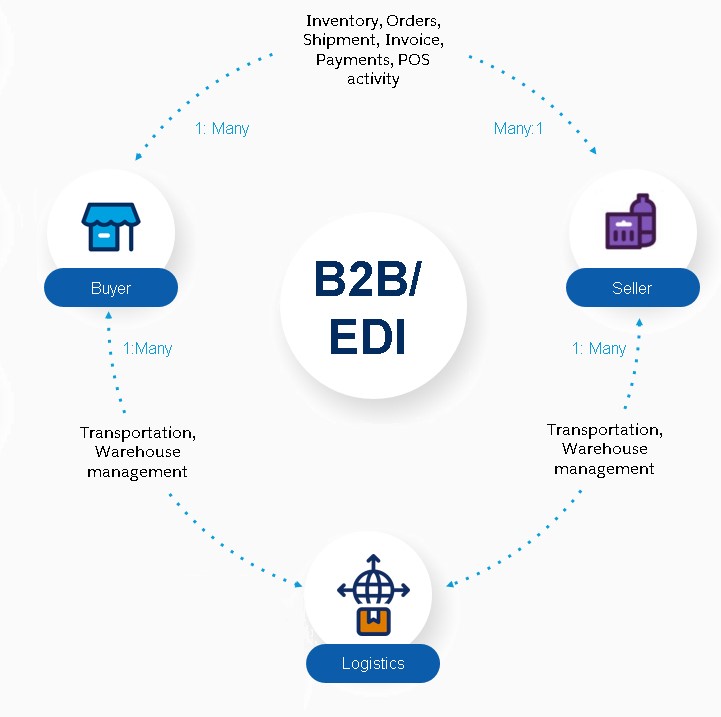
What Is a B2B Integration Platform?
Anypoint Partner Manager functions as a central B2B integration platform within the Anypoint ecosystem. It enables two-way partner communication using APIs and EDI while centralising onboarding, configuration, and monitoring activities.
In addition, the platform supports secure protocols such as HTTPS, SFTP, and AS2. It also works with common data formats including X12, JSON, and XML. Because of this flexibility, organizations can connect with partners operating on different technical standards without building custom point-to-point integrations.
As part of the broader integration capabilities from MuleSoft, it aligns partner connectivity with modern API-led architecture.
Why B2B Partner Integration Is Critical for Modern Enterprises
Simplifying Complex B2B Communication
B2B organisations exchange large volumes of operational data every day. However, fragmented systems often slow down these exchanges. A unified partner management platform improves consistency, reliability, and governance across partner interactions.
Enabling API-Based B2B Integration
Real-time business processes depend on fast data access. Therefore, API-based B2B integration enables automation, faster response times, and improved system interoperability across partner ecosystems.
Supporting an EDI Integration Solution Without Disruption
Although APIs are becoming more common, EDI remains essential in many industries. A modern EDI integration solution allows organisations to modernise gradually while continuing to support long-standing trading partners.
Strengthening Security and Compliance
Since B2B data often includes sensitive commercial information, secure data transfer is essential. Encryption, secure protocols, and controlled access help reduce risk and support compliance requirements.
Improving Flexibility Across Data Standards
Partners rarely share the same data model. Consequently, support for X12, JSON, and XML enables smoother collaboration and reduces transformation effort.
Accelerating Partner Onboarding at Scale
Manual onboarding delays growth. By standardising partner setup, organisations can onboard new partners faster while maintaining consistent integration standards.
Driving Efficiency Through Automation
Automation reduces manual processing and error handling. As a result, integration teams spend less time on operational issues and more time on strategic initiatives.
Scaling a B2B Connectivity Solution
As partner networks grow, integration complexity increases. A scalable B2B connectivity solution ensures performance and stability even as transaction volumes rise.
Gaining Visibility Across Partner Transactions
Operational visibility is critical for issue resolution. Monitoring and reporting tools help teams identify failures early and maintain service reliability.
Creating Competitive Advantage Through Integration
Reliable integrations strengthen partner trust. In turn, this reliability supports faster business execution and long-term competitive advantage.
Core Capabilities of a Partner Management Platform
Key capabilities include:
- Partner onboarding: Standardised setup for faster enablement
- Secure protocol support: HTTPS, SFTP, and AS2 communication
- Flexible message handling: X12, JSON, and XML support
- API-led integration: Real-time partner data exchange
- EDI compatibility: Continued support for legacy systems
- Security and compliance controls: Data protection and audit readiness
- Transaction monitoring: End-to-end visibility into data flow
- Centralised partner management: Configuration and access control
- Scalable architecture: Supports growing partner ecosystems
- Operational efficiency: Reduced manual effort and errors
- Reporting and analytics: Insight-driven decision support
- Alerts and notifications: Faster issue detection
- Audit trails: Governance and compliance support
Together, these features position the solution as a robust foundation for managing complex B2B integration environments.