
AI data governance is no longer optional. As organizations accelerate the adoption of AI agents and intelligent automation, the foundation of success is not just algorithms, but the integrity of data powering them.
However, many enterprises rush into deploying AI systems without establishing governance frameworks. As a result, they expose themselves to compliance failures, operational risks, and reputational damage.
Trusted AI starts with trusted data. Without it, even the most advanced AI systems become unreliable.
The Rise of AI Agents and Integration Complexity
AI agents are transforming how businesses operate. From automating workflows to enabling decision intelligence, they are now embedded across enterprise systems.
Yet, as AI agents scale across integrations, complexity increases rapidly.
Consider this:
- AI agents pull data from multiple systems
- They make decisions based on real-time inputs
- They interact with APIs, CRMs, and data lakes
Without governance, this interconnected ecosystem becomes fragile.
Therefore, data governance for AI agents is critical. It ensures consistency, traceability, and accountability across every interaction.
Why AI Without Governance is a Business Risk
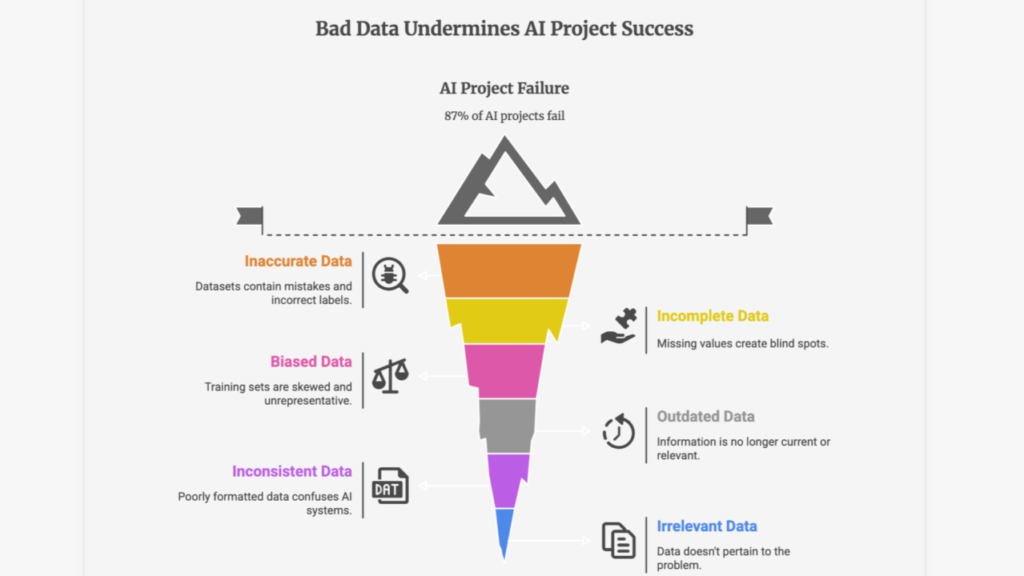
Organizations often assume that AI accuracy depends solely on models. In reality, the biggest risk lies in data quality and governance.
1. Inaccurate Decision-Making
AI systems rely on data. If the data is incomplete, biased, or outdated, the outputs become flawed.
Consequently, businesses may make decisions based on incorrect insights.
2. Compliance and Regulatory Exposure
With global regulations evolving, AI compliance is under scrutiny.
Without an AI governance framework, organizations struggle to:
- Track data lineage
- Ensure privacy compliance
- Audit AI decisions
This creates significant legal and financial risks.
3. Lack of Explainability
Modern enterprises demand explainable AI.
However, without structured data governance, it becomes impossible to trace:
- Where data originated
- How it was transformed
- Why a decision was made
As a result, trust in AI systems declines.
4. Integration Failures in AI Systems
AI agents in integration environments depend on clean and consistent data flows.
Without governance:
- APIs return inconsistent outputs
- Data mismatches occur
- Automation breaks
Therefore, AI integration governance becomes essential for stability.
AI Governance Framework: The Foundation of Trusted AI
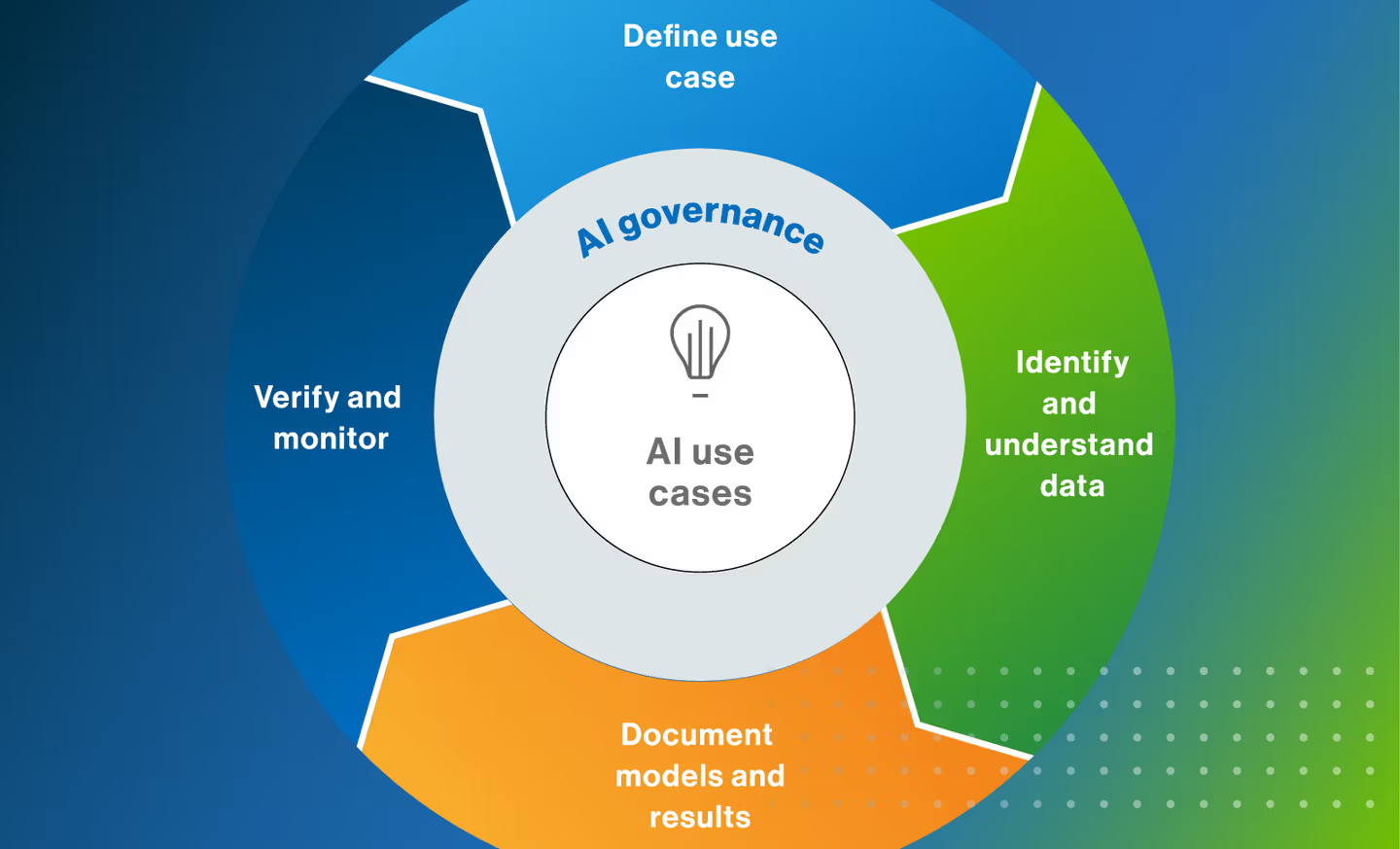
To build reliable AI systems, organizations must implement a structured AI governance framework.
This framework should include:
Data Quality Management
Ensure data is:
- Accurate
- Complete
- Consistent
Because poor data quality directly impacts AI performance.
Data Lineage and Traceability
Track how data flows across systems.
This enables:
- Auditability
- Debugging
- Compliance readiness
Access Control and Security
Define who can access what data.
This reduces:
- Unauthorized usage
- Data leaks
- Security vulnerabilities
Model Governance
Govern not just data, but also AI models.
This includes:
- Version control
- Performance monitoring
- Bias detection
Policy and Compliance Alignment
Align AI systems with regulatory frameworks.
This ensures:
- Ethical AI usage
- Legal compliance
- Risk mitigation
Data Governance for AI Agents in Integration
AI agents in integration environments require a specialized governance approach.
Unlike traditional systems, AI agents:
- Continuously learn
- Adapt to new inputs
- Operate autonomously
Therefore, governance must evolve accordingly.
Key Considerations
- Real-time data validation
- Cross-system data consistency
- Monitoring AI agent behavior
- Governance across APIs and microservices
As AI agents scale, governance must scale with them.
How to Build an Enterprise AI Governance Strategy
Building an AI governance strategy requires a structured approach.
Step 1: Define Governance Objectives
Start by identifying:
- Business goals
- Risk tolerance
- Compliance requirements
Step 2: Establish Data Ownership
Assign clear ownership for data assets.
This ensures accountability across teams.
Step 3: Implement Governance Tools
Leverage platforms that enable:
- Data cataloging
- Metadata management
- Policy enforcement
Step 4: Integrate Governance into AI Workflows
Governance should not be an afterthought.
Instead, embed it into:
- Data pipelines
- Model development
- Deployment processes
Step 5: Continuously Monitor and Improve
AI systems evolve. Therefore, governance must evolve too.
Regularly:
- Audit data quality
- Review policies
- Optimize governance processes
The Future of Trusted AI Systems
As AI adoption grows, governance will become a competitive advantage.
Organizations that prioritize AI data governance will:
- Build more reliable AI systems
- Achieve faster compliance readiness
- Reduce operational risks
- Gain customer trust
On the other hand, those who ignore governance will face increasing challenges.
Why Trusted Data is the Core of AI Success
According to SEO best practices, high-quality, trustworthy content and signals improve visibility and credibility . Similarly, in AI systems, trust starts with data integrity.
Just as search engines evaluate Experience, Expertise, Authoritativeness, and Trustworthiness, AI systems depend on governed, reliable data to deliver accurate outcomes.
Therefore, the principle remains consistent:
Better data leads to better decisions.
Conclusion: Govern First, Scale AI Second
AI innovation is accelerating. However, without governance, innovation becomes risk.
AI data governance is not a constraint. Instead, it is an enabler of scalable, secure, and trusted AI systems.
Organizations must shift their mindset:
- From rapid deployment to responsible deployment
- From data usage to data governance
- From AI experimentation to AI reliability
Because in the age of AI, governing the truth is the only way to build trust.