Enhancing Patient Care Through Seamless Digital Workflow Orchestration
Impact Summary
- Accelerated Service Delivery: Optimized end-to-end workflows for laboratory and radiology services across multiple facilities.
- Unified Patient Experience: Successfully synchronized data between two major digital portals and core hospital information systems.
- Zero-Downtime Deployment: Utilized stub-based testing to ensure 100% functional accuracy before connecting to live production environments.
- Optimized Resource Management: Greatly reduced manual data entry and administrative bottlenecks through automated appointment and payment flows.
Client Overview
As a prominent healthcare network in the Philippines, this client focuses on delivering a consistent and high-quality care experience across all medical touchpoints. Historically, the disconnect between digital portals and physical hospital systems created a fractured patient experience. Inefficiencies were evident in manual workarounds and delayed diagnostic reports, which frustrated both clinicians and patients alike. To resolve this, the provider initiated a targeted digital transformation to bridge the gap between their Patient and Doctor portals and the Hospital Information Systems. Through a strategic integration intervention, the team automated the entire lifecycle of a patient visit, from booking an appointment to processing payments and receiving results.
The result is a seamless digital health experience that empowers patients with real-time access to their medical data while significantly reducing the administrative burden on hospital staff.
Project Details
| Category | Details |
| Sector | Healthcare & Life Sciences |
| Tech Stack | MuleSoft, Azure, Digital Portals (Patient & Doctor) |
| Approach | Agile Delivery, Stub-Based Integration Testing |
Technical Challenges
Workflow Fragmentation
Patient data for appointments, radiology, and billing lived in separate, disconnected systems. This lack of synchronization required manual data entry, which increased the risk of errors and slowed down patient care.
Downstream System Unreadiness
Many core hospital systems were not technically ready for real-time integration during the development phase. This obstacle threatened to delay the project timeline and prevent the testing of critical patient-facing features.
Inconsistent Diagnostic Reporting
The lack of a unified data flow made the transmission of diagnostic reports to digital portals slow and inconsistent. Patients often had to wait longer than necessary to access their own health information online.
The Solution
Clinical Workflow Orchestration
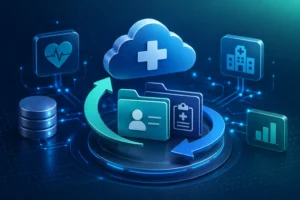
NJC Labs architected a series of APIs that manage complex business logic across different departments. This orchestration ensures that when a patient books a laboratory test, the request is automatically routed to the correct facility and recorded in the appropriate system.
Dynamic Routing Implementation
The team created a unified database for dynamic routing. This allows the system to automatically direct transactions to any connected hospital system based on the patient’s location and specific medical needs, ensuring a smooth flow of information.
Stub-Based Testing Methodology
To overcome the unreadiness of legacy systems, NJC Labs utilized FHIR-based stubs to simulate live environments. This allowed for parallel development and thorough end-to-end testing, ensuring that the integration layer was fully optimized and error-free before the actual systems were connected.
Business Results
Seamless Care Experience
Patients can now manage laboratory and radiology appointments through a single digital interface with real-time updates. This transparency has led to higher patient satisfaction and better engagement with the provider’s digital platforms.
Rapid Functional Delivery
The project met all functional milestones for Phase 1 and Phase 2 on schedule. This timely delivery provided immediate value to the business, enabling the successful launch of the Doctor and Patient portals within the first year.
Looking Ahead
The success of these automated workflows provides a blueprint for expanding the digital ecosystem. Future phases will focus on integrating telehealth services, wearable devices, and health insurance providers. Further placing the patient at the center of the care model through continuous digital engagement and personalized health insights.