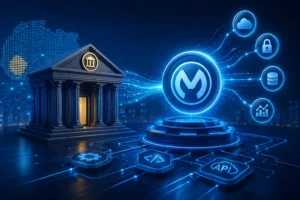
Modernizing Public Service Payments via Core Banking Integration
Impact Summary
- Enhanced Customer Experience: Integrated government and utility bill payments directly into the mobile banking application. This improved digital banking integration capabilities and increased user satisfaction.
- Architectural Decoupling: Shielded the Temenos core banking system from external traffic through a secure API gateway. This ensured a scalable core banking integration architecture.
- Reduced Integration Costs: Leveraged reusable domain services for customer, account, and payment management, enabling a cost-efficient banking middleware solution.
- High-Volume Scalability: Engineered the middleware to handle peak transaction loads during monthly billing cycles, supporting enterprise-grade digital banking scalability.
- Expanded Service Portfolio: Enabled rapid integration with diverse telecom and utility service providers, accelerating API banking integration across ecosystems.
Client Overview
A leading financial institution in the Levant region, recognized for its diverse commercial banking services and its strategic focus on digital-first customer experiences.
Digital ambitions were hindered by the complexity of the core banking system. Directly connecting mobile applications to the core system created operational risks and slowed down the rollout of essential services like utility payments. Our partnership focused on architecting a sophisticated middleware layer that acts as both a protector and an accelerator, thereby enabling secure core banking integration at scale.
By creating domain-aligned APIs, we enabled the bank to integrate with external government billing systems in various international regions. The current environment is an agile banking ecosystem where new services, ranging from telecom recharges to government fees, can be added to the mobile channel with efficiency, driving continuous digital banking transformation.
Project Details Table for Banking Middleware Solution
| Category | Details |
| Sector | Retail & Digital Banking |
| Tech Stack | MuleSoft, Temenos T24 Core, RESTful APIs, Government Billing Gateways |
| Approach | Domain-Driven API Design (DDD) |
Technical Challenges in Core Banking Modernization
- Core Banking Exposure: Directly exposing the core system to mobile channels posed security and stability risks. The bank needed a way to provide real-time account access without putting the system of record at risk, which is a common limitation in legacy core banking modernization initiatives.
- Heterogeneous External Integrations: Integrating with various government bill payment systems required handling multiple protocols and data formats. Each external partner had its own unique API structure and security requirements, complicating API banking integration efforts.
- Transaction Atomicity: Ensuring that payments were correctly debited from the bank account and credited to the utility provider required complex orchestration. The system had to handle failures gracefully to prevent data discrepancies, especially in high-volume digital payment environments.
The Solution: API Banking Integration via Middleware
- Domain-Aligned Middleware Services: We designed a suite of services organized by business domains: Customer, Account, Payments, and Loans. These services translate complex core banking logic into simplified, reusable APIs for any digital channel, forming a robust banking middleware solution for seamless integration.
- Government Billing Gateway: A dedicated integration layer was built to communicate with various regional billing systems. This middleware orchestrates the transaction flow between the mobile application and external government APIs, ensuring reliable digital banking integration across multiple providers.
- API Security and Masking: We implemented rigorous security measures, including mutual TLS and data masking. This ensures that sensitive customer information remains protected during exchanges with third-party service providers, meeting enterprise-grade compliance standards in core banking integration.
Business Results
- Superior Mobile Engagement: By integrating utility and government payments, the bank has seen a significant increase in mobile app retention. Customers can now manage their entire financial lives from a single digital interface, enhancing the overall digital banking experience.
- Improved Maintainability: The decoupling of digital channels from the core system means that core upgrades no longer disrupt the mobile application. This architectural independence has reduced the total cost of ownership for the IT ecosystem, while supporting long-term core banking modernization.
- Faster Partner Onboarding: The use of standardized middleware has streamlined the process of connecting with new service providers. The bank can now integrate with telecom and utility companies much faster than before, enhancing its market competitiveness, and accelerating API-driven banking partnerships.
Looking Ahead
With a robust domain-service layer in place, the bank is ready to explore Banking as a Service opportunities. They can now easily extend these same APIs to partner platforms and aggregators, creating new revenue streams in the evolving digital economy, positioning the organization for scalable, future-ready core banking integration.
More Case Studies