MuleSoft Omni Gateway: The Evolution of API Gateways for the AI Era
For years, API gateways have been one of the core building blocks of enterprise integration. They helped standardize security, routing, observability, rate limiting, and traffic management across enterprise systems.
Most architectures followed a fairly predictable pattern:
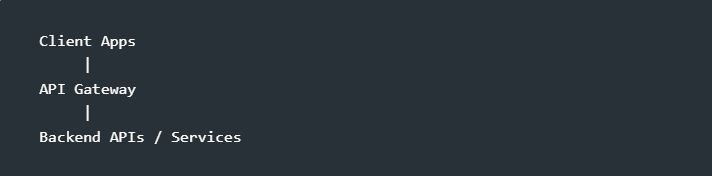
Applications talked to APIs, and APIs talked to backend systems. The interaction model was largely deterministic and human-driven.
But AI is beginning to change that architecture significantly.
Why Traditional API Gateways Are No Longer Enough
Modern AI systems behave very differently from traditional applications.
AI agents are increasingly being designed to:
- dynamically choose tools
- invoke APIs autonomously
- communicate with other agents
- retry operations independently
- generate unpredictable traffic patterns
- consume large volumes of LLM tokens
This introduces an entirely new governance challenge.
Traditional API gateways were never originally designed for:
- LLM traffic
- prompt governance
- AI tool discovery
- token usage tracking
- agent-to-agent communication
- semantic routing
- AI observability
This is the broader problem MuleSoft is trying to address with Omni Gateway.
So What Exactly Is Omni Gateway?
At a high level, Omni Gateway extends API management into the AI ecosystem.
Instead of governing only APIs, the gateway can now govern:
- AI agents
- LLM interactions
- MCP traffic
- AI tools
- Agent-to-Agent (A2A) communication
Conceptually, the architecture begins to look more like this:
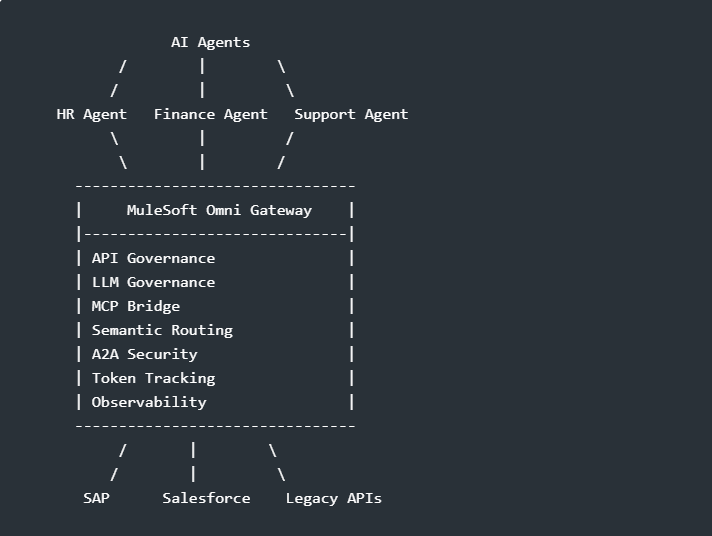
The important thing here is that Omni Gateway is not replacing APIs. Instead, it becomes the governance layer sitting between enterprise systems and AI-driven execution.
This Builds Upon the Flex Gateway Foundation
One interesting detail from MuleSoft’s announcement is that Omni Gateway builds upon the Flex Gateway foundation and extends it toward AI governance capabilities.
So this feels less like:
“Here is a completely new gateway product”
…and more like:
“Here is the next evolution of enterprise gateway architecture.”
Traditional Flex Gateway capabilities remain:
- API security
- traffic management
- observability
- rate limiting
- multi-cloud deployment
- Kubernetes support
- Envoy-based runtime architecture
But MuleSoft is now extending those capabilities into AI governance and agentic architectures.
You can think of the evolution like this:
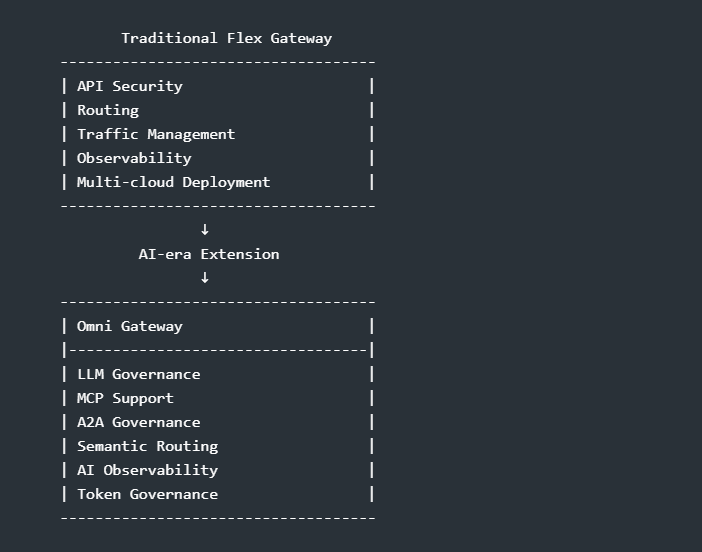
That architectural continuity makes a lot of sense because enterprises already expose APIs through MuleSoft infrastructure. Omni Gateway simply extends those systems into the AI ecosystem in a governed way.
Unified LLM Governance
One of the most practical capabilities introduced is centralized LLM governance.
Today, many enterprises are experimenting with multiple model providers simultaneously:
- OpenAI
- Claude
- Gemini
- Bedrock
- Azure OpenAI
- internal/private models
Without a centralized governance layer, teams often integrate these providers independently. That can quickly create duplicated integrations, inconsistent security models, fragmented observability, and uncontrolled token costs.
Omni Gateway introduces a centralized control plane for LLM traffic.
Instead of:

The architecture becomes:
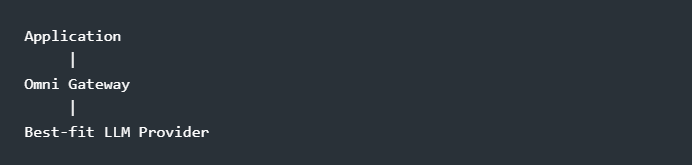
This enables:
- centralized authentication
- token tracking
- fallback handling
- audit logging
- policy enforcement
- cost optimization
Semantic Routing Is One of the Most Interesting Features
Traditional gateways route requests based on URLs and paths.
For example:

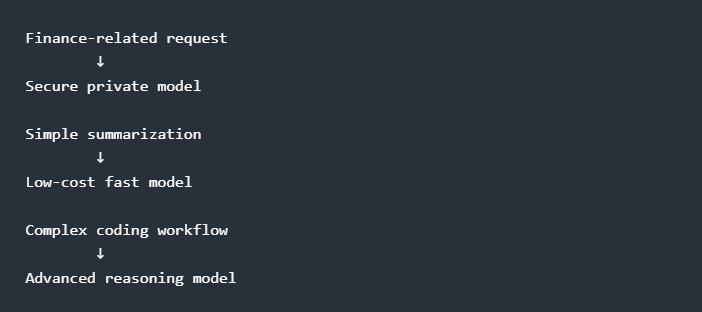
But AI requests are very different. The same API endpoint may receive finance prompts, summary requests, coding tasks, or compliance processes.
Omni Gateway adds smart routing, where the gateway can make routing decisions based on AI request context and management policies.
Example:
This becomes extremely valuable for:
- cost optimization
- compliance
- performance management
- model governance
And all of this can happen without changing application logic.
MCP Bridge May Be the Biggest Architectural Shift
Another major concept introduced is the MCP Bridge.
MCP stands for Model Context Protocol. A simple way to think about MCP is that it standardizes how AI agents discover and use tools.
Historically, AI integrations were heavily hardcoded.
Example:
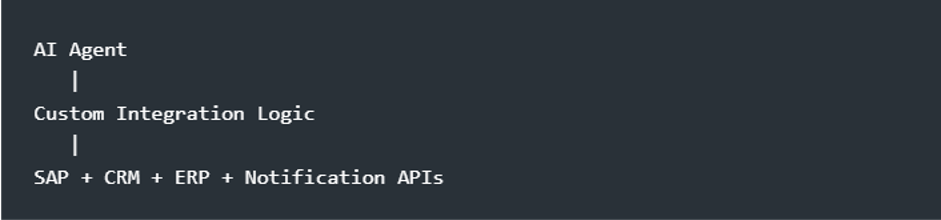
As systems scale, this becomes increasingly difficult to maintain.
With MCP Bridge, existing APIs can be exposed as shared AI tools without needing major backend changes.
The architecture becomes:
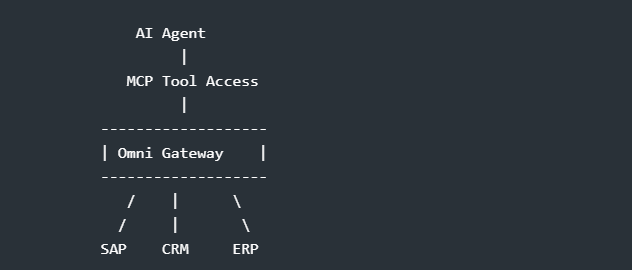
This allows enterprises to reuse existing API investments while enabling AI agents to interact with systems dynamically.
That is a major architectural advantage.
MCP vs A2A: An Important Difference
Many developers will initially confuse MCP and A2A, but they solve completely different problems.
MCP focuses on:

A2A focuses on:

Example:
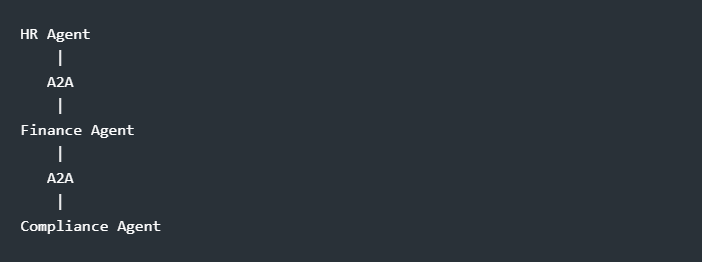
As organizations move toward multiple AI agents working together, management becomes increasingly important. Without shared controls, monitoring and protecting these interactions becomes very difficult.
That is where Omni Gateway’s A2A management features become relevant.
Full-Chain AI Observability
Traditional monitoring focused mainly on API latency, throughput, and failures.
AI systems require much deeper visibility.
Organizations now need to trace:
- prompts
- token usage
- tool invocations
- model selection
- agent execution paths
- AI failures
The execution chain starts looking something like this:
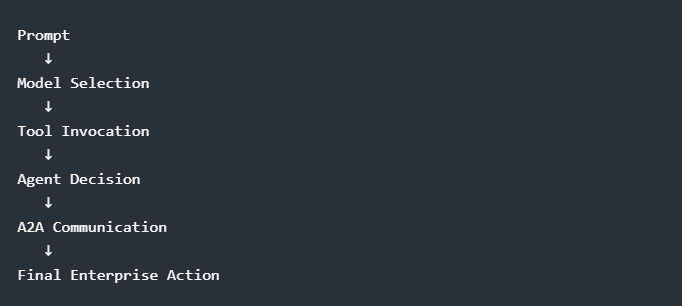
This level of visibility becomes essential for troubleshooting, compliance, reviewing, FinOps, and system control, especially once AI systems begin taking independent actions across enterprise platforms.
Why This Matters for MuleSoft Developers
This feels like one of the biggest architectural shifts in MuleSoft since API-led connectivity.
Historically, many MuleSoft projects focused on:
- SOAP ↔ REST transformations
- API orchestration
- backend integrations
- system connectivity
But AI-native enterprise integration introduces entirely new patterns:
- AI-aware APIs
- MCP exposure
- agent orchestration
- semantic routing
- AI governance
- token-aware architectures
- enterprise AI observability
The integration landscape itself is evolving, and MuleSoft appears to be positioning itself as the governance layer around enterprise AI execution rather than just traditional API management.
Final Thoughts
The interesting part about Omni Gateway is that MuleSoft is not trying to compete with LLM providers.
It is not building “another AI model.”
Instead, it is focusing on something enterprises urgently need:
Governed AI execution.
As AI agents become capable of interacting with enterprise systems autonomously, the real challenge shifts toward:
- governance
- security
- observability
- compliance
- operational control
That is the space Omni Gateway is targeting.
And honestly, this feels less like a simple gateway upgrade and more like the next evolution of enterprise integration architecture.
References
- https://blogs.mulesoft.com/news/mulesoft-omni-gateway
- https://www.mulesoft.com/platform/omni-gateway-announcement